
How do I protect and license my IP ?
In today’s tech-driven world, artificial intelligence is shaping industries and transforming lives. But as AI advancements surge, so do concerns about safeguarding innovative ideas. Protecting AI-based solutions isn’t just about compliance—it’s about securing competitive advantage and fostering sustainable innovation.
Although the fundamentals of intellectual property (IP) protection remain the same for AI as they do for traditional software, the stakes are higher. AI development requires a more nuanced approach to identifying, protecting, and commercializing intellectual assets.
The foundation of a successful AI IP strategy lies in recognizing valuable innovations early. This means fostering a company culture that values discovery and collaboration between technical and legal teams. AI hasn’t changed this—it’s only intensified the need for it.
- The Particular Challanges of IP Protection in AI
AI technologies present unique hurdles for traditional IP frameworks. Some of the most valuable components—like training data, annotations, and proprietary processes—don’t easily qualify for patent protection. This is where a multi-layered IP strategy becomes essential.
Companies should also consider trade secrets and copyrights to protect critical, non-public information. For example, carefully curated data sets and annotation processes are not always patentable, but can be protected as trade secrets, especially in Software-as-a-Service (SaaS) models where the technology is not visible to users.
Deciding which IP protection is most appropriate depends on the nature of the innovation and how it’s delivered. Patents are useful when AI enhances computer functionality or is embedded in a consumer-facing product that’s vulnerable to reverse engineering. But for backend systems and data infrastructure, trade secrets and robust contractual agreements may offer stronger protection.
And don’t forget: in the world of AI, data is key. The way data is collected, labeled, and used can be as valuable as the AI model itself.
- AI Licensing: Balancing Opportunities and Control
Whether you’re developing or using AI technologies, licensing terms must align with business goals while carefully managing risk.
Licensing agreements should clearly outline how the technology—and its outputs—can be used. This includes defining who owns the data, who can use it, and under what conditions. One common point of tension: licensors often want to use the licensee’s data to improve their models, while licensees want to keep their data private.
A flexible, tiered pricing model can resolve this. For instance, a licensee might pay a premium to ensure their data is not reused by the licensor. Alternatively, hosting the AI software on the licensee’s servers, instead of via a cloud-based SaaS model, can give the licensee more control while limiting broader access to the enhanced AI.
Licensors should also secure rights to use licensee data beyond the agreement’s end. Standard contract clauses—like mutual obligations to return or destroy data—may need to be rethought in light of AI-specific business models.
- Minimizing Risks Through Proactive IP Management
At its core, a well-crafted IP strategy is about risk mitigation—whether from competitors, third-party partners, or internal leaks.
Strong contracts are essential. They should clearly define ownership of all IP—both background (pre-existing) and foreground (developed during collaboration)—and include indemnification clauses to shield against infringement claims.
However, contracts shouldn’t be your only line of defense. Proactive IP due diligence—especially when using third-party AI tools—is vital to avoid inadvertently surrendering rights or exposing sensitive data. Always read the fine print of service agreements and licensing terms.
- Conclusion
Companies working with AI must take a comprehensive, strategic approach to IP. That means understanding the unique characteristics of AI innovations, applying the full range of IP protections, and tailoring licensing agreements to reflect business priorities and risk appetites.
With the right approach, businesses can not only safeguard their AI investments but also unlock their full commercial value.
Click through our Tips:
- Important protective measures for intellectual property
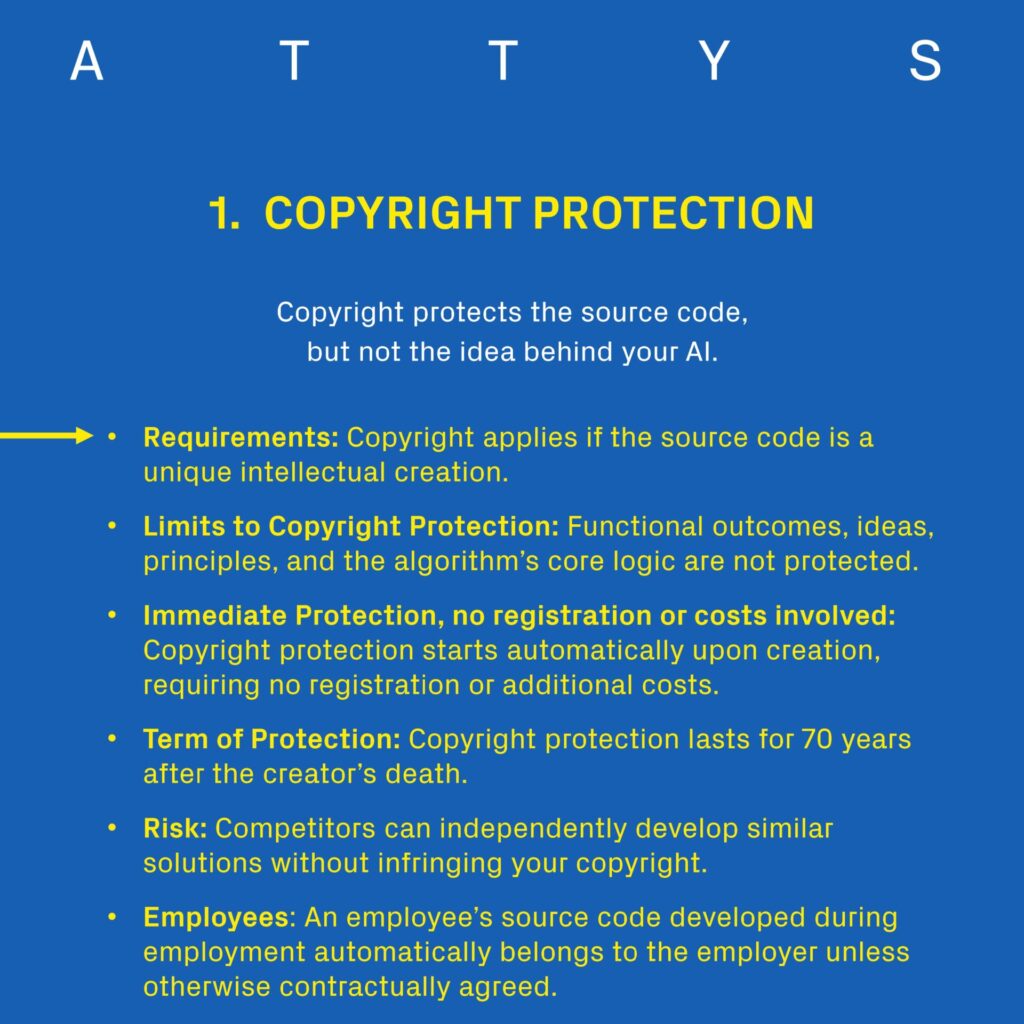
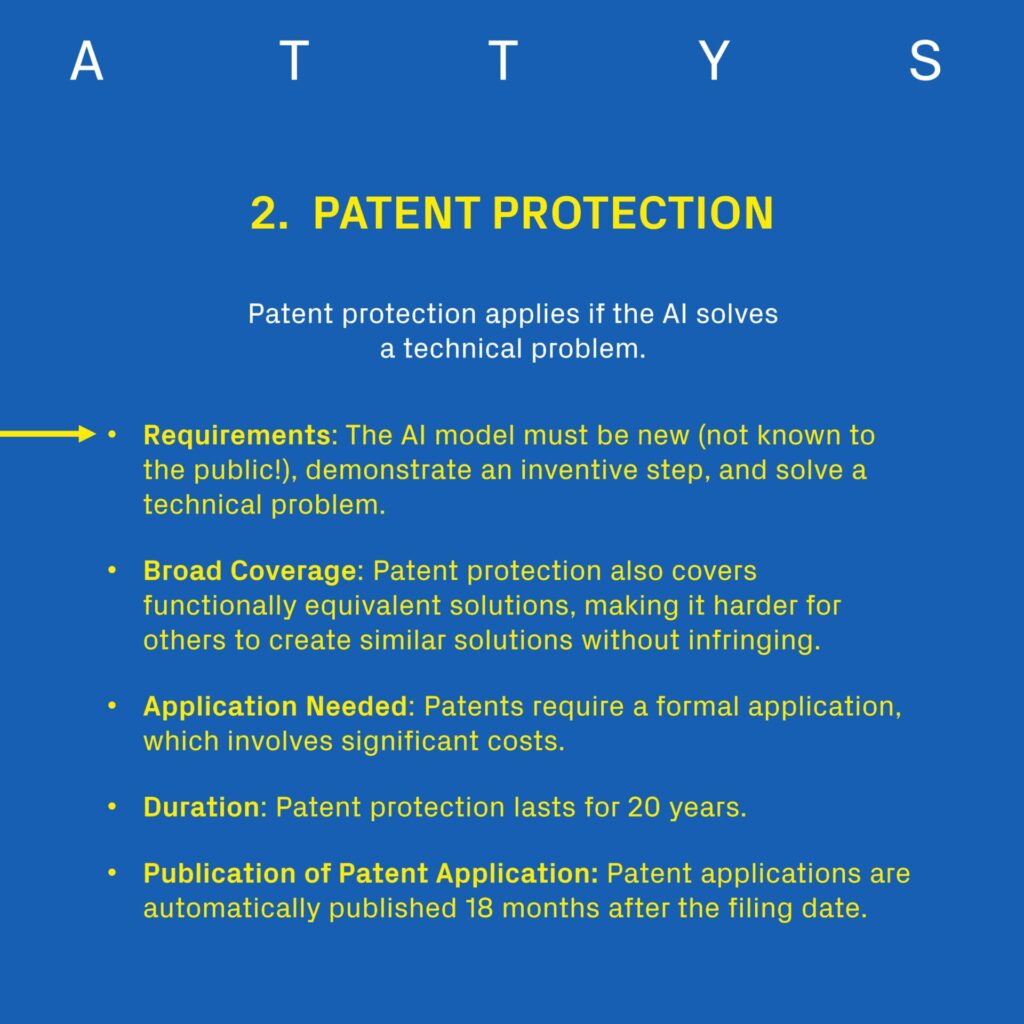
- Handling copyright, patents, and trade secrets
- IP protection strategies that increase the value of your innovation


Note: This article is intended solely as general information and does not constitute legal counsel from ATTYS 05 Rechtsanwälte GmbH. This article is not a substitute for individual legal counsel. ATTYS 05 Rechtsanwälte GmbH assumes no liability of any kind for the content or accuracy of this article.